PDRN and Exosomes Lead K-Beauty's Clinic-to-Shelf Skincare Boom

PDRN reviews on Olive Young grew 103% while exosome reviews surged 229% in six months. Korea's clinic-grade skincare movement is no longer confined to dermatology offices. The ingredients that once required a prescription or a clinic visit are now on retail shelves, and consumers are buying faster than brands can stock them.
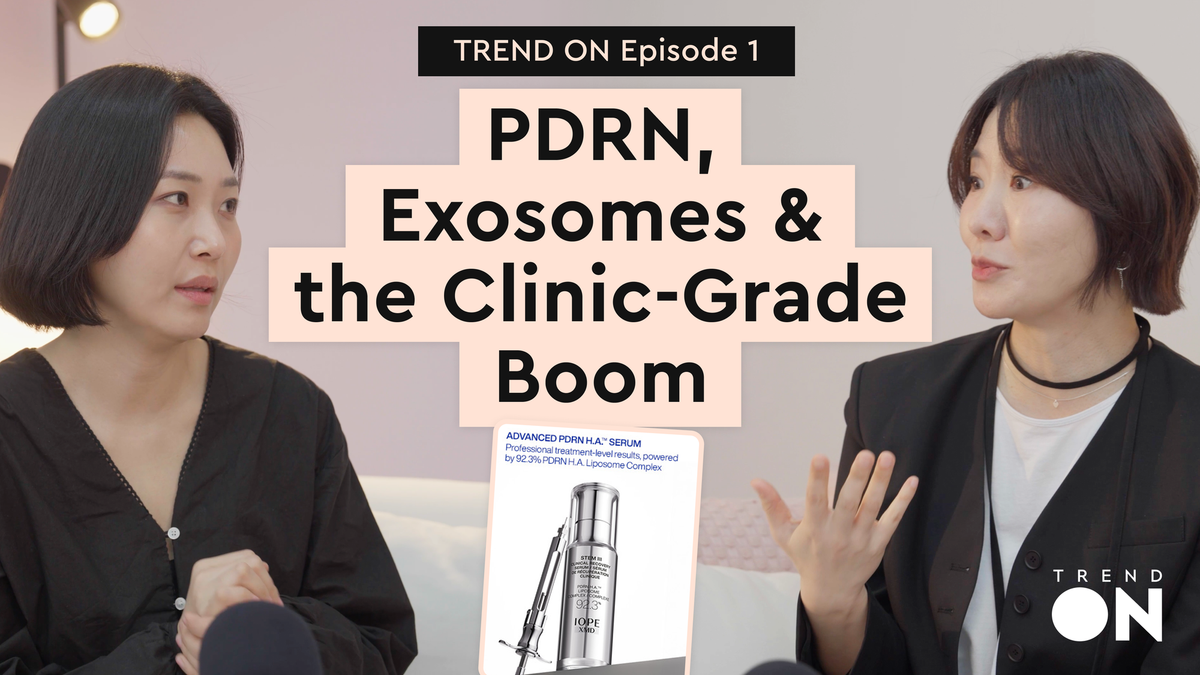
In the debut episode of Trend On, trendier AI's data team unpacks this shift using Olive Young, Naver, and Amazon US data.
From the Clinic Chair to the Bathroom Shelf
Consumers who once paid millions of Korean won for clinical skin treatments now want similar results at home. They are not expecting identical outcomes from a serum. They want skin that visibly changes through daily use. Brands have responded with "clinic-concept positioning" that borrows clinical language, packaging, and ingredients.
The migration started with a handful of actives. PDRN came from rejuran injections. Exosomes crossed over from stem cell therapy. Spicule arrived from microneedling. Tranexamic acid moved from melasma prescriptions. Each carried clinical credibility before touching a retail shelf.
The Data Separates Winners from Noise
Not every clinic-derived ingredient is thriving equally. Trendier AI's Olive Young tracking over six months reveals a clear split. PDRN product count grew 42.8% while reviews surged 103.3%. Exosome products grew 34.3% with reviews jumping 229.2%. Both are accelerating.
Spicule and tranexamic acid tell a different story. Spicule products grew 28% but reviews declined. Tranexamic acid barely expanded in product count, and its reviews also fell. Consumer interest is concentrating around PDRN and exosomes while other clinical actives lose momentum.
The global picture reinforces this. The PDRN market is projected to grow from $320 million in 2025 to over $800 million by 2035. On Amazon US, PDRN listings and reviews are both climbing. American consumers now cite Korean clinical procedure names in their product reviews.
How PDRN Went Viral: Eye Drops to Export Phenomenon
The origin story starts in early 2024 with artificial eye drops. Dermatology and pharmacist influencers revealed that certain Korean eye drops contain PDRN, the same regenerative ingredient used in rejuran skin injections. The discovery went viral. Within months, Myeongdong pharmacies became pilgrimage sites for foreign tourists who had already visited Olive Young.
This created a new tourist circuit. Visitors now move from Olive Young to pharmacies in a single trip, guided by influencer-recommended routines. Some tour operators offer personal-shopper-style experiences matching tourists to products by skin type. Foreign patients spent over 100 billion won on skin procedures in Korea last year.
One brand moved first and captured market leadership, now holding roughly 30% of PDRN share on Olive Young. In the exosome category, another brand leads at approximately 21%. Its hero serum grew 585% in a single month after an exosome-focused product renewal.
Syringe Packaging and "Injection" Naming
The clinic influence now extends beyond ingredients into product design. Syringe-shaped packaging has proliferated across Olive Young shelves. Products with "injection" in their name are multiplying. One trending application method involves applying cream in a grid pattern that mimics rejuran injection sites. Reviews call the resulting glow "addictive."
The boundary between cosmetics and clinical tools continues to blur. At-home NAD injection pens now let consumers self-administer active ingredients into skin. One brand recently combined PDRN with NAD, merging the clinic-grade trend with the longevity ingredient movement. The hosts tease that longevity skincare will be the focus of the next Trend On episode.
Why It Matters
For brands entering Korea's skincare market, clinic-concept positioning is now a competitive baseline. PDRN and exosomes are the two actives with accelerating consumer engagement; spicule and tranexamic acid are losing momentum. For brands targeting global expansion, American consumers are already adopting Korean clinical language in reviews. The data reveals which ingredients are winning.
Frequently Asked Questions
What is clinic-grade skincare in K-beauty?
Clinic-grade skincare refers to consumer products using ingredients from dermatology treatments. PDRN (from rejuran injections), exosomes (from stem cell therapy), spicule (from microneedling), and tranexamic acid (from melasma prescriptions) are the primary actives. PDRN and exosomes show the strongest growth on Olive Young.
How fast is PDRN growing on Olive Young?
PDRN product count grew 42.8% and reviews grew 103.3% over the most recent six months tracked by trendier AI. The global PDRN market is projected to reach $800 million by 2035, up from $320 million in 2025.
Are exosomes growing faster than PDRN?
In review growth, yes. Exosome reviews grew 229.2% versus PDRN's 103.3%. However, PDRN leads in product count growth at 42.8% versus exosomes at 34.3%. Both ingredients are outpacing spicule and tranexamic acid.
Why are American consumers mentioning Korean skin treatments?
Amazon US reviews increasingly reference Korean clinical procedure names. As K-beauty tourism grows and clinic-grade products go global, American consumers are adopting the treatment-level language that Korean consumers already use to evaluate skincare.
What started the PDRN skincare trend?
The trend accelerated in early 2024 when influencers revealed that certain Korean artificial eye drops contain PDRN, the same ingredient in rejuran injections. This viral discovery drove pharmacy tourism and launched the consumer PDRN skincare category.
Methodology: Analysis based on trendier AI's tracking of Olive Young, Naver, and Amazon US data, discussed in Trend On Episode 1, published June 5, 2026.
📺 Watch the full Trend On EP.1 discussion on clinic-grade skincare, PDRN, exosomes, and the data behind the trend on YouTube.
💬 Run your own clinic-grade skincare analysis on trendier AI:
"Show me PDRN and exosome product count and review growth on Olive Young over the last 6 months. Which brands are leading in each ingredient category and what are the top-reviewed products?"
"Compare clinic-grade ingredient trends across Olive Young Korea vs Amazon US. Which ingredients are growing fastest in each market and how do consumer review themes differ?"
#PDRN #Exosomes #KBeauty #ClinicSkincare #TrendierAI