[The K Beauty Science] The Golden Window for K-Beauty’s Global Leap Through Data and AI Integration

![[The K Beauty Science] The Golden Window for K-Beauty’s Global Leap Through Data and AI Integration](https://storage.ghost.io/c/29/58/29584234-d41d-4cc7-a520-98b4c87c8015/content/images/size/w1200/2026/03/ADKq_NYGqwyB0ro4vJFdZkgyRHIlhtjBdVaRzg43IhDFsj3-JRoOGOPZ_vxq6jV6iD4WUWumvpsNj-aJMbXFUWWhrS6cTwcV7uNnwbX8Ja5MsHrz5W_us0-d-e1-ft-1.png)
This article is originally posted by on 안용찬 기자 (Ahn Yong-chan) on The K Beauty Science's March 26, 2026 Article. To read the full feature, please visit the link below.
 안용찬 기자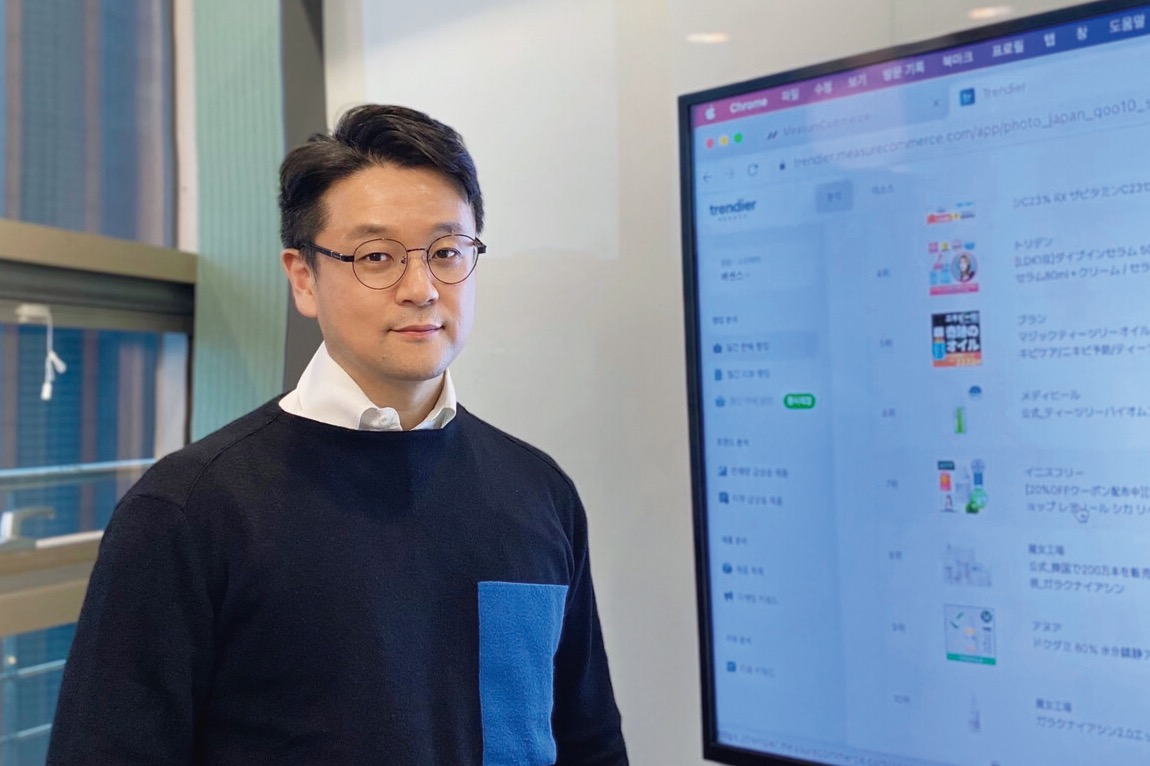
Innovation That Doesn’t Put AI Front and Center
[INTERVIEW] Kei Chun, Co-CEO of MeasureCommerce & Trendier AI
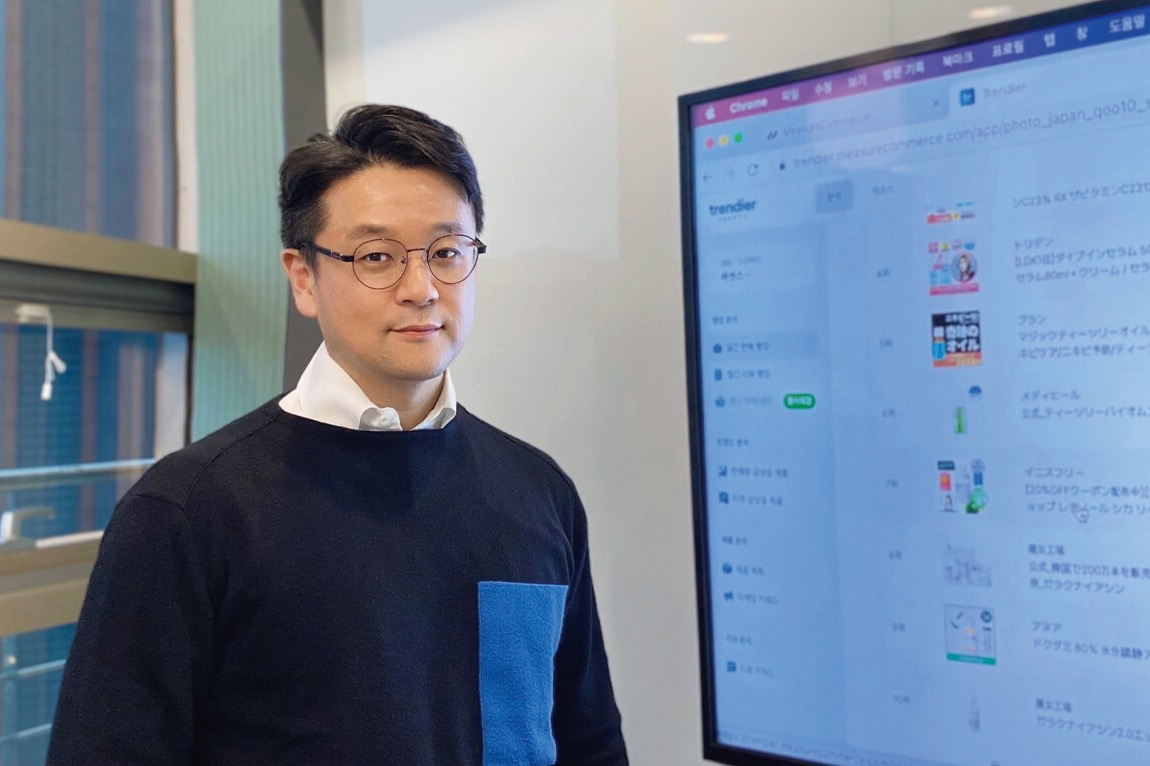
“The core competitive edge in the AI era lies in well-refined data that AI can learn from, and a team’s ability to execute quickly.”
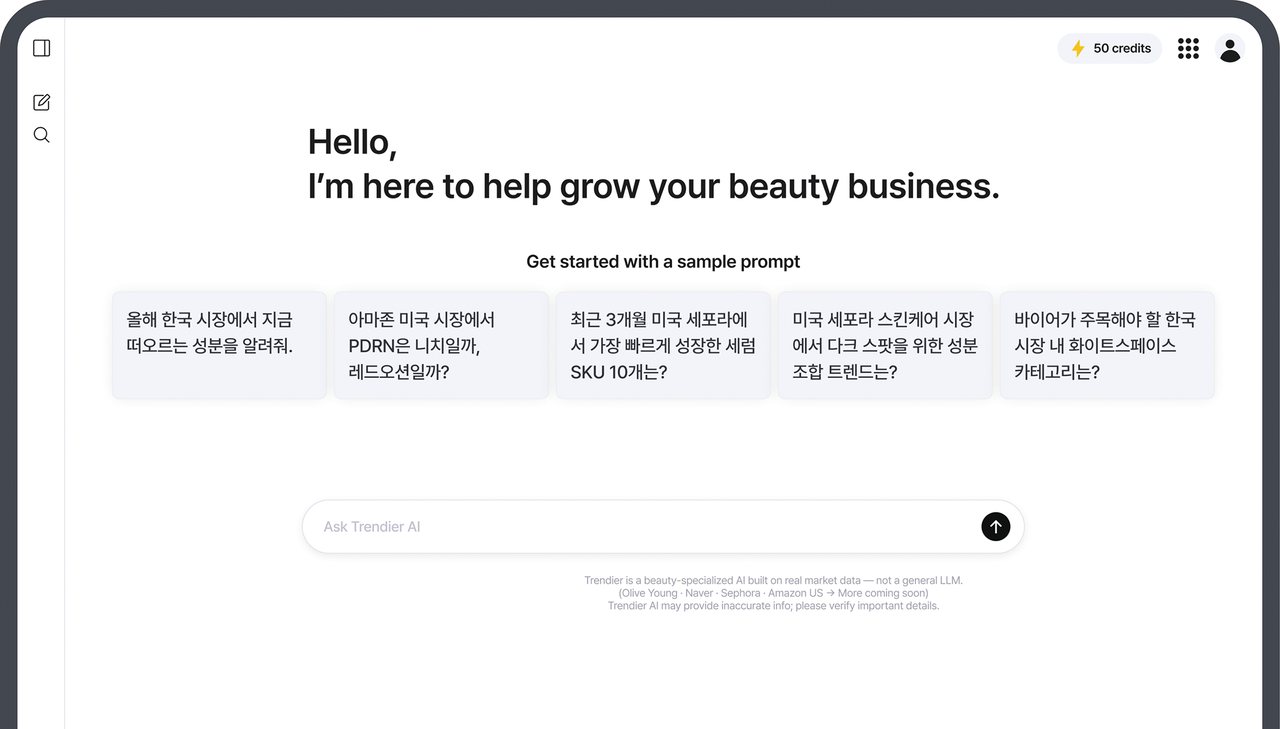
This was the key message presented at the Trendier AI Bootcamp hosted by MeasureCommerce in May last year. The program, which began in Seoul, was later featured as a four-hour special session at Cosmoprof Asia, one of the largest beauty exhibitions in Asia. It was also selected as one of the most noteworthy companies in the Innovators Showcase at NRF Big Show 2026—often referred to as the “Super Bowl” of the U.S. retail industry—drawing attention as a technology set to reshape the next generation of retail.
We spoke with Kei Chun, Co-CEO of MeasureCommerce, which operates Trendier AI, about how the cosmetics industry should prepare for the AI era. Trendier AI is an AI solution specialized for the beauty industry, analyzing both product supply and consumer demand data across more than 30 global markets. Based on this, it supports decision-making and automates workflows across the entire value chain—from R&D and product planning to marketing and sales strategies. Today, more than 3,000 beauty teams worldwide, including leading retailers, brands, and manufacturers, use Trendier’s services.
In this interview, Chun emphasized that K-beauty has reached a pivotal moment where it can secure global leadership by combining data with AI—what he described as a “very short yet critical golden window.” While K-beauty has already proven its competitiveness in planning and product quality, he explained that the industry has now entered a phase where the structure of decision-making itself determines competitiveness.
“If data- and AI-driven decision-making is integrated, K-beauty can move beyond simply participating in the market to defining global standards,” he said, identifying this moment as a turning point in the industry’s structural transformation. He added that a new wave of entrepreneurs—young talents who experienced both the first generation of the mobile era and the second generation of global expansion—are launching new ventures in the AI era, while both domestic and international investors are taking notice. Support programs and industry ecosystems tailored to each stakeholder’s strengths are also rapidly emerging.
“K-beauty’s speed, execution power, industrial infrastructure, and global growth experience are now being fully combined with data and AI,” Chun noted. “This is the moment for a leap forward.” He further recommended that “by 2026, companies should adopt AI into both management and operations, regardless of form or method.”
Q. What inspired the creation of the Trendier AI Bootcamp?
The Trendier AI Bootcamp is Korea’s first hands-on program to apply AI based on global retail data to real-world operations. It was designed to share AI automation strategies that can be directly implemented across actual workflows in the beauty industry—from product planning to global expansion.
It all started with a question from the field: “We know AI is important, but we don’t know how to apply it to our work.” While many people have experimented with general-purpose AI, they often find it difficult to rely on for critical decision-making due to inaccuracies or hallucinations—where AI generates information that is not factual but appears convincing.
Beauty industry data is highly complex, with consumer language, sales, ingredients, efficacy, price, and ratings all intricately intertwined. Without high-quality data and proper business context, asking general AI tools questions rarely yields meaningful answers. That’s why we concluded that providing refined, industry-specific data along with processes that make it immediately usable in practice is essential.
The core of the Trendier AI Bootcamp is not just AI education—it is about redesigning workflows across R&D, planning, marketing, and sales around AI through hands-on practice.
Q. The statement “Companies that don’t adopt AI within three years will fall behind” was quite strong. What does it mean for the industry?
Today, competitiveness in the cosmetics industry goes beyond simply creating a “good product.” In a market where consumer responses, pricing, review patterns, and ingredient and efficacy trends change in real time, the ability to respond quickly has become the defining competitive advantage.
K-beauty is expanding beyond the U.S. and Japan into Europe, the Middle East, and Southeast Asia, while categories are also diversifying—from skincare to makeup, hair and body, and inner beauty. As the number of variables—countries, cultures, languages, regulations, and consumer codes—grows exponentially, it has become increasingly difficult for human cognition alone to keep up.
With the introduction of AI, tasks that once took a month can now be completed in hours or even minutes. I believe that around 2026 will be a turning point when organizational structures and workflows are fundamentally reshaped. The next three years are not about whether to use AI, but about designing how to work with AI—this is the true “golden window.”
Q. What are the most common misconceptions or failure factors when companies adopt AI?
There are two major misconceptions. First, the belief that AI is an all-powerful tool that automatically provides answers. Second, the assumption that using the latest model guarantees better results.
In reality, even the most advanced AI cannot deliver meaningful outcomes if data is not structured in a way it can understand, or if the problem itself is not clearly defined. One of the biggest reasons AI projects fail is when they are implemented separately from existing workflows. Even if leadership drives adoption, results will be limited if employees continue working in the same old way.
That’s why I recommend approaching AI not as a technology implementation, but in this order: define the business problem → develop data-driven solutions → automate execution. AI transformation is less an IT project and more about company-wide talent development and changes in how work is done.
Q. How can companies trust Trendier AI’s analysis?
This is the most common question we receive. General-purpose AI learns from publicly available text such as PR articles, blogs, and social media. While it produces natural language, it has limitations when it comes to making company-specific decisions.
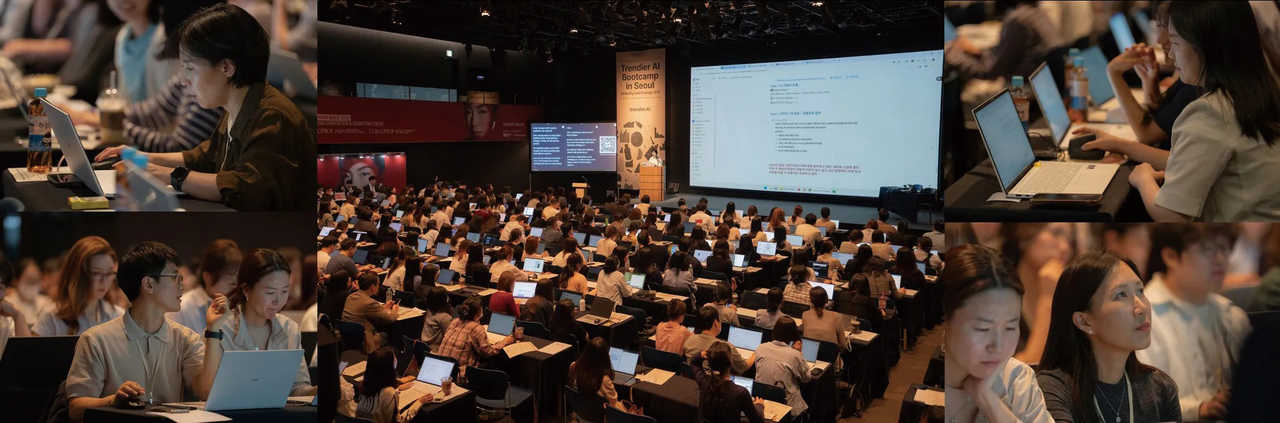
Trendier AI takes a different approach. It analyzes real product, pricing, review, and sales data generated across more than 30 global e-commerce channels. By simultaneously examining supply data (price, ingredients, efficacy) and demand data (sales, ratings, complaints), it provides not just trend summaries but concrete market context and competitive insights.
Another key point is transparency. Trendier AI is designed not only to provide results but also to allow users to verify the underlying data. Large enterprise clients, in particular, often cross-check raw data—such as competitor SKU messaging, original customer reviews, and price fluctuations—within the dashboard. This ability to validate insights builds trust in real-world decision-making.
Q. What does “refined data” mean, and why is a validation system important?
“Refined data” is not just clean data—it is standardized data structured in a way that both AI and humans can understand. Different countries and platforms use different category systems and naming conventions, and even the same concept may be expressed differently. These inconsistencies must be unified, while synonyms, variations, and typos in reviews and keywords must be organized before the data becomes usable.
Trendier does not rely on a single AI, but rather a team of specialized AI agents. Some agents refine consumer reviews and marketing keywords, others convert user questions into data queries, and others redefine the core problem. While users interact with a single interface, multiple specialized AI agents collaborate behind the scenes.
These agents are trained on years of accumulated data, including error patterns and customer feedback since 2018. By proactively filtering misleading expressions and noise, they continuously improve the quality of insights over time.
Q. Where should brands and manufacturers start when structuring their data?
The starting point is leadership—specifically, having a clear vision and problem definition. Even with the same dataset, outcomes differ depending on the leadership’s vision, the customer problems they aim to solve, and the markets they target.
Practically, companies should build systems that allow them to compare external data—such as global high-growth trends—with internal data like advertising performance, customer responses, and sales. They also need to align organizational structures and processes so that R&D, planning, marketing, and sales can all access and interpret the same data.
AI helps identify high-growth opportunities and reduces experimentation costs, but deciding where to focus and what hypotheses to test remains a leadership responsibility. That’s why the starting point of AI adoption is not technology, but vision and problem definition.
Q. How can cosmetic researchers use Trendier AI?
Researchers are skilled at validating academic facts, but often struggle to determine whether a concept will actually drive consumer purchases. Trendier AI bridges this gap by layering real market data on top of research insights.
By analyzing data across more than 30 markets, Trendier identifies fast-growing ingredients and efficacy trends, consumer perceptions by formula, and recurring complaint patterns. This allows researchers to make faster, more informed decisions and reduce trial and error in early-stage R&D.
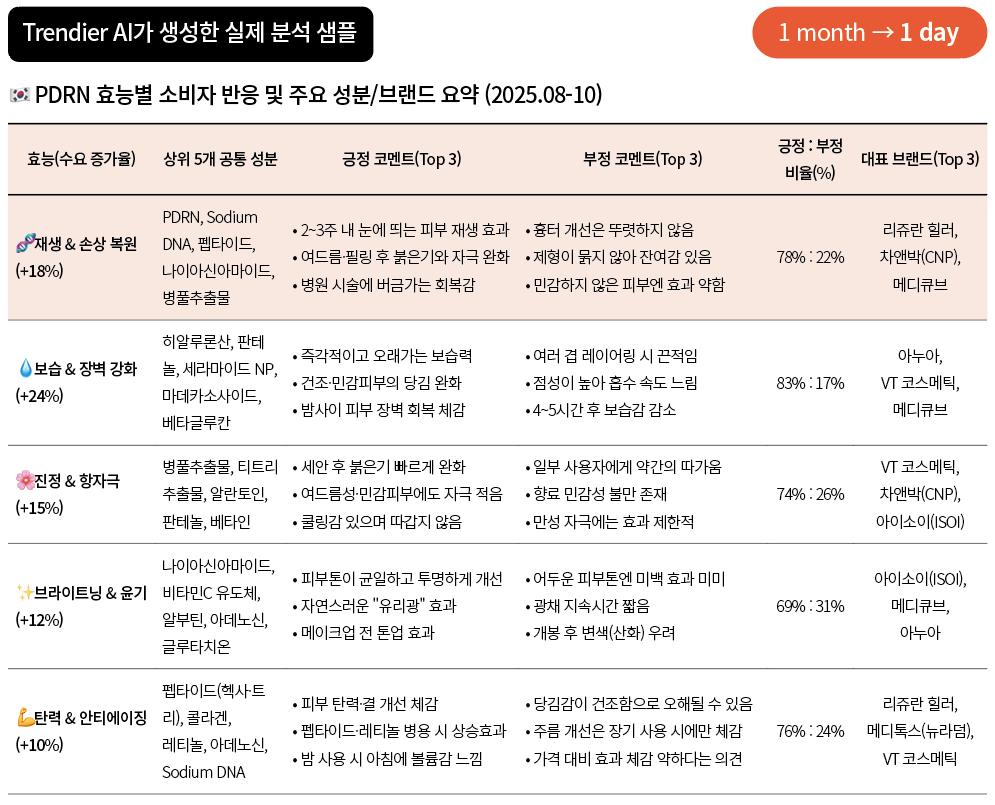
For example, when analyzing PDRN products, AI can automatically organize key “efficacy + ingredient” combinations across major channels and extract positive and negative review patterns for comparison. What once required extensive sampling and research can now be reviewed within a day.
Q. How does the concept of an “AI Factory” apply to the cosmetics industry?
An AI Factory is not a physical factory—it is more like an automated system for recurring decision-making processes in the cosmetics industry.
For example, it can generate scenarios for how to position fast-growing ingredients, simulate pricing strategies when competitors adjust prices, extract recurring complaints from reviews to inform product improvements, and analyze competitor ad creatives to suggest differentiation points.
When these processes are automated like a production line, it forms an AI Factory. Ultimately, the goal is to connect R&D, planning, marketing, and sales into a unified, intelligent layer rather than operating as separate functions. The next three years will likely be a transitional period—from human-AI collaboration to collaboration among multiple AI agents.
Q. How is AI influencing manufacturer selection criteria?
Global retail buyers now evaluate both growth potential and profitability at a granular level. They analyze which brands are growing fastest within specific ingredient trends and which subcategories can become new revenue streams.
This involves comparing both supply (launch frequency, competition intensity) and demand (reviews, efficacy feedback), prioritizing companies that show strong growth on both sides.
As a result, expectations for manufacturers are changing. Beyond cost and quality, they are now expected to interpret market data, translate consumer language into product language, and collaborate with brands to test hypotheses. Manufacturers are evolving from production partners into “intelligent development partners” that co-design products based on data.
Q. How are AI-driven global expansion strategies evolving?
AI-driven global expansion strategies differ depending on whether a company is in the pre-launch phase or focusing on exporting existing products.
Before product development, AI analyzes fast-growing items, recurring consumer interests, and unresolved problems in target markets. It identifies gaps where demand outpaces supply and suggests product concepts, features, and marketing angles for market entry.
For brands with existing products, the key is presenting their value to global buyers using data. By showing how core ingredients, efficacy claims, and related trends are growing in target markets—and providing comparable success cases—brands can help buyers quickly understand their growth potential.
These analytical frameworks are also tailored for manufacturers, ingredient suppliers, and packaging companies, making global partner communication more persuasive.
Q. What about barriers like management buy-in and cost?
Korea is a fast-moving market in terms of generative AI adoption. The real challenge today is not understanding AI, but deciding where and how to start.
The key considerations are time opportunity cost and compounding effects. Several indie brands that started small 3–4 years ago have achieved rapid growth by leveraging data effectively. Their common strength lies in continuously improving market understanding and execution speed through accumulated data insights.
Rather than making large upfront investments, I recommend starting with low-risk, repetitive tasks. The real value of AI is not the subscription cost, but how much it accelerates decision-making and enables faster, more accurate experimentation. AI transformation is not a cost-cutting initiative—it is a growth strategy that accelerates learning.
Q. What is the future direction of Trendier AI?
Trendier’s long-term vision is to go beyond analytics and become a “Co-founder AI”—a system that participates in core decision-making and execution across the entire business process.
From strategy and R&D to product planning, marketing, and automation, the goal is to build AI that actively collaborates within real workflows.
As K-beauty companies continue to expand into more markets and increasingly granular categories, the next 3–5 years will likely see large-scale automation and structural transformation, accelerating innovation even further.
In this context, Korea is one of the best environments to develop global, beauty-specialized AI solutions. Interest from overseas markets in Trendier’s AI innovations is rapidly growing. Its Trendier Library service, which provides weekly insights on fast-growing global beauty trends, has already been used over 2.5 million times across 134 countries.
Just as K-beauty is setting new global standards, Trendier AI aims to establish a new benchmark for AI innovation across the beauty industry.